
California Kingsnake
California Kingsnake
Lampropeltis getula californiae
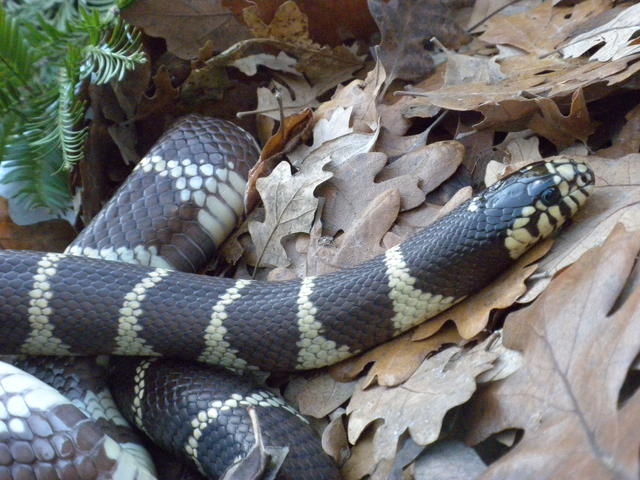
Kingsnakes vary in color and pattern but usually have noticeable bands or stripes. Color variations include black with creamy yellow bands, brown with yellow bands, black with a white vertical stripe, brown with yellow stripe, and speckled patterns.
A kingsnake will hiss, shake its tail, or strike when threatened. It may also curl into a ball with its head at the center and emit a foul odor through their vent (the opening from which they excrete fecal matter). They are neither venomous nor aggressive but might bite if surprised or threatened.
As a constricting snake, California Kingsnakes are very strong, allowing them to squeeze their prey till they suffocate. They hunt small rodents and mammals, but also have the ability to hunt other snakes, including rattlesnakes! They have an enzyme in their body that breaks down rattlesnake venom, so as long as they have enough of this enzyme, the venom won’t hurt them!
Lindsay is home to two California kingsnakes. Apollo came to us from the Stanislaus Wildlife Care Center in 2019. He was confiscated by the California Department of Fish and Wildlife after being kept as an illegal pet. Wild snakes that have been taken as pets should not be returned to the wild because they have lost their “home” to another snake, and risk spreading diseases to wild populations. Kingsnakes have home territories and defend them against other snakes.
In 2022, we welcomed our female kingsnake, Cora. Cora was surrendered to us after being kept as a pet for 8 years. As a captive bred kingsnake, her color pattern is uncommon in the wild as she had one albino parent and one “wild type” parent. Cora suffers from issues of reduced muscle mass, which have led to her becoming egg bound, where she struggles to pass her eggs, and having to undergo surgery in the past. In order for our ambassadors to continue to work out and build muscle, we exercise them frequently. Cora lives behind the scenes, but can often be seen exercising on her climbing structure during visits to the main exhibit hall.
Apollo and Cora were both named in keeping with the Greek “theme” we established with Zeus, our late California kingsnake ambassador. We wanted Zeus’ legacy to live on, as he was a very much loved ambassador.