
Acorn Woodpecker
Acorn Woodpecker
Melanerpes formicivorus
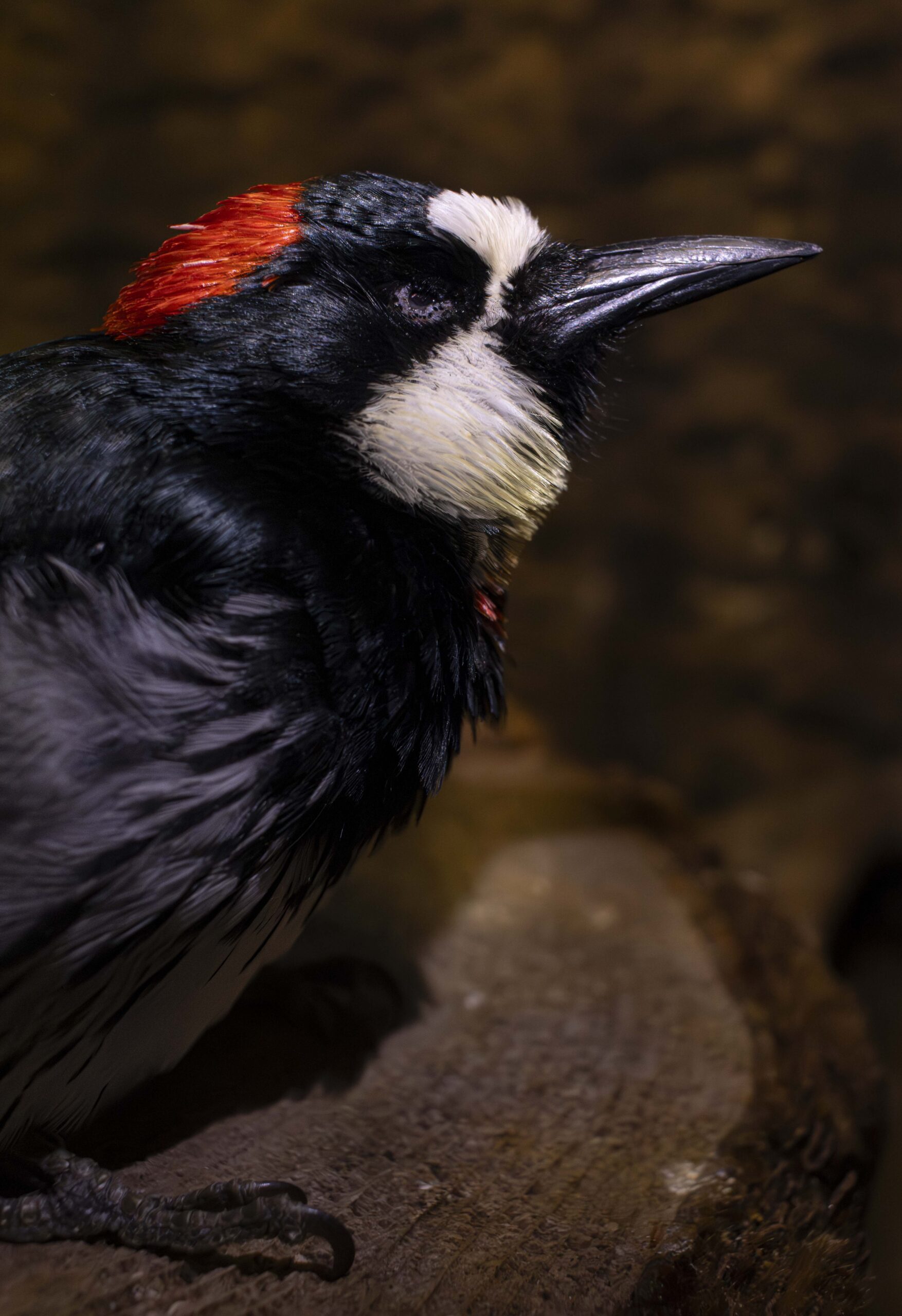
Acorn woodpeckers, much like their name suggests, feed heavily on acorns. However, they will also feast on many types of insects, tree sap and fruit. They listen for movement in tree bark and use their sharp beaks to break into the tree, using their long tongues to fish out any insects that they manage to latch on to.
In California, Acorn woodpeckers will create granaries by drilling holes into objects such as dead trees, telephone phones, even wooden buildings, to place an acorn and pack it in for later. This homemade storage unit will allow the bird to visit and feed from during the winter when food may not be as plentiful.
Habitat loss is a major threat to these native birds. What can we do to help? Preserve trees that Acorn woodpeckers flourish around, including mature oak and pine-oak stands.
Lindsay Wildlife is home to one very vocal Acorn woodpecker, named for the signature bright red marking on her forehead: Garnet!
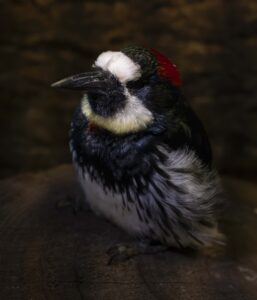
Garnet was discovered as a juvenile on the ground in San Ramon, showing evidence of an animal attack. She was brought to the Lindsay Wildlife Hospital in June of 2019 while in care for her injuries, vets noticed that her vision was impaired due to an abnormality in the structure of her eyes that she was likely born with. Her impaired vision would significantly affect Garnet’s ability to forage and evade predation, and it was determined that she could not be returned to the wild. In 2020, she officially joined our ambassador team. Garnet’s enclosure is specifically designed with both the biology of an Acorn Woodpecker and her reduced vision in mind, with plenty of wood for “pecking” and foraging, as well as strategically placed perches to help Garnet navigate her environment. During the day you can find her busily pecking at new enrichment, foraging for her diet, and talking to her caregivers.